


UK pension savings will become subject to Inheritance Tax (IHT) on 6 April 2027 (eight months and counting).
For years, many wealthy families have used pensions as a tax-efficient way to transfer assets to future generations.
With this option due to close, acting now could help you to reduce a potential IHT charge on your estate if your pension forms part of your estate plan, or your retirement savings combined with other assets are likely to tip your estate over the IHT thresholds.
Read more: Still have UK pension savings? This big Inheritance Tax rule change may require you to act now
To ensure more of your wealth reaches your chosen beneficiaries, here are several useful gifting allowances that you could make use of.
1. Make use of your annual gifting allowance
In the 2026/27 tax year, you can gift up to £3,000 a year free of IHT.
Better still, you can carry the gift forward. So, if you didn’t use your exemption in the previous tax year, you could gift up to £6,000 tax-efficiently in a single year.
Since this rule applies to every UK individual, working together with your spouse or civil partner could allow you to gift up to £6,000 each year. And, if you both carry the exemption forward, you could gift up to £12,000 in a single tax year.
2. Show your love with a generous wedding gift
When someone you know is getting married or starting a civil partnership, give them tax-free cash to wish them well.
The amount you can gift depends on your relationship.
- Children or stepchildren: £5,000
- Grandchildren: £2,500
- Any other relative or friend: £1,000
As long as you stick within these limits, any money you gift to marrying couples will fall outside of your estate for IHT purposes.
3. Give as many small gifts as you wish
The small gift allowance allows you to give as generously as you like.
Although you can’t use this rule to give more to someone who’s already benefited from a different IHT gifting allowance, you can give multiple gifts of up to £250 to anyone else you’d like each tax year.
This doesn’t apply to birthday or Christmas gifts, which are typically exempt from IHT – as long as you pay them from income.
4. Use surplus income to gift regularly
If you have surplus income, or wish to reduce your pension savings by increasing the amount you withdraw, you could gift the extra cash free of IHT – but you must gift the same sum at regular intervals.
To comply with the rules, regular financial gifts must:
- Be made from income – employment earnings, pension, or other sources – not savings or capital
- Form a regular pattern – monthly or quarterly, for example
- Not negatively impact your standard of living.
Gifting from surplus income on a regular basis could be used to:
- Provide financial help to an elderly relative to pay for care or additional help at home
- Support family with additional cash to cover their rent, mortgage, or utility bills
- Cover education fees for your grandchildren.
Unlike other gifting allowances, there’s no cap on the amount that you can gift in this way. However, it’s crucial that you keep detailed records. Your executors may need to show HMRC who the payments were made to and that they were sent at regular intervals.
5. Gift unlimited amounts through “potentially exempt transfers”
Of course, there’s nothing to prevent you from gifting more of your wealth, if you choose.
Financial gifts above and beyond the allowances described here are known as “potentially exempt transfers” (PETs).
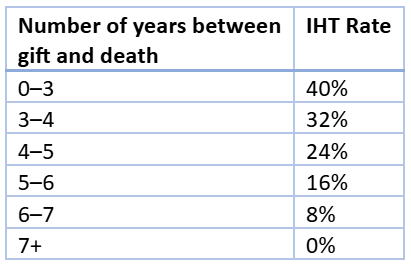
While giving PETs can help to reduce the value of your estate, they only remain exempt from IHT if you survive beyond seven years after making the gift.
In short, if you pass away within seven years of making a financial gift over and above the rules you’ve read about here, it may become liable for IHT.
The amount of IHT that may become due depends on how long you survive after making the gift:
Deciding to gift more of your wealth using a PET isn’t always straightforward, so get in touch to discuss whether it would be helpful for you and your beneficiary before you commit.
A conversation first could help ensure your loved ones don’t receive an unexpected IHT bill later.
Always keep clear and accurate notes about the financial gifts you make
When dealing with your estate, your executors may have to prove what you have gifted and when.
This detailed guide explains why you may be affected by the new IHT rules and how you might manage your estate’s IHT liability.
If you have any questions about gifting rules, IHT, or your overall financial plan, please get in touch.


