


Human nature has programmed us to expect the worst. Our survival instincts insist that we focus on risk, scarcity, and “what if” scenarios. In financial terms, for some people, this can result in an almost constant fear of running out of money.
Peniaphobia isn’t limited to people who are struggling financially. In fact, it often affects high-earning, successful individuals who are used to being in control.
Following part one of this Peniaphobia series, you read about how the fear of running out of money could prompt you to adopt negative behaviour that may end up making the fear come true.
Left unchecked, this fear could harm your quality of life, pushing you to:
- Work longer than necessary
- Delay important life decisions
- Make financial choices based on anxiety rather than clarity.
The good news is that good financial planning could help reassure you, and potentially cure an unhelpful bout of peniaphobia.
5 positive steps you can take to ensure you don’t run out of money
At Ascenta, we focus on lifestyle financial planning. We start with your goals and aspirations and develop bespoke financial plans to support your long-term dreams. We’re here as your financial guide and will help you create a life you love by making smarter decisions with your money.
As well as working with a seasoned professional, here are five steps that could help prevent you from running out of money.
1. Create a robust financial plan
Every financial plan should begin with clear and specific goals. Knowing what you’re working towards will give you the motivation you need to stick with your investing strategy over the long term and help you adopt a long-term mindset you may need to withstand short-term market volatility.
While we’ll always encourage you to dream big, it’s important to keep your goals realistic. Setting goals beyond your reach could lead you to make decisions that could ultimately derail your financial plans.
2. Adopt a regular and sustainable savings habit
Effective financial planning is all about balancing your present income needs with your future goals.
While it’s important to ensure you’re able to enjoy your lifestyle today, it’s equally important to ensure you’re setting enough aside to help you meet your future goals.
Among the best ways to do this is to adopt a regular savings habit.
We often recommend clients set aside a certain amount of money at the same time each month – ideally aligned with when you receive your earnings.
Set up automatic bank transfers each month to send the desired amount to your investment or savings accounts. The remaining income is your spending money for that month.
This disciplined approach helps you enjoy your income in the knowledge that you’re also making consistent and positive progress towards your future financial goals.
3. Invest for long-term goals
While cash savings can be useful for short-term expenditures or emergency funds, they may not be a good strategy for accumulating the wealth you need in the long term.
This is because any money you hold in cash savings may lose purchasing power over time unless the interest rate on your savings account is consistently higher than the rate of inflation.
In contrast, investing in the stock market could help your wealth keep pace with inflation.
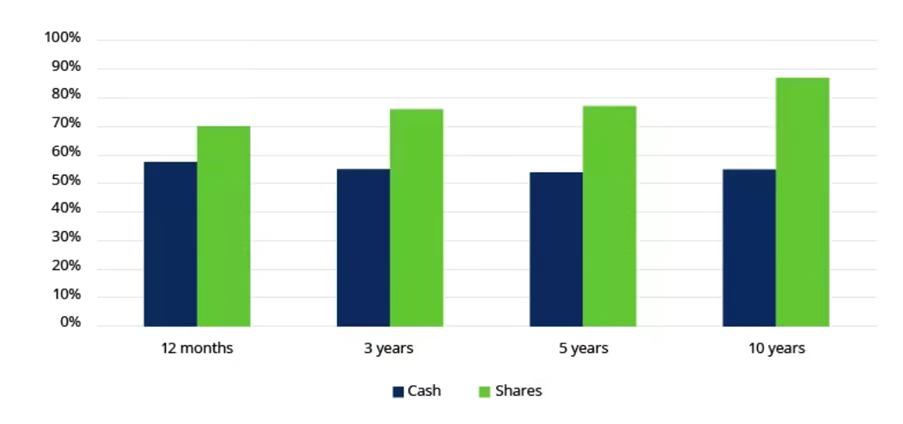
The graph below shows the percentage chance of beating inflation with cash and shares over different time frames.
Source: Schroders
As you can see, historically, cash savings have had around a 55%-60% chance of beating inflation no matter how long you hold on to your savings. On the other hand, there has been nearly a 90% chance of shares beating inflation over 10 years.
If your fear of running out of money is already heightened, the idea of investing – and accepting short-term market ups and downs – can feel uncomfortable.
Remember, long-term investing doesn’t mean taking reckless risks or chasing returns at any cost. Rather, it’s about building a diversified portfolio aligned to your goals, time horizon, and tolerance for risk, so you can grow your wealth steadily and still sleep soundly.
4. Understand how much is “enough”
Fear often comes from not knowing where you stand. So, now that you’ve defined your long-term goals, you’re well positioned to understand how much is “enough” for you.
When it comes to having “enough”, most people fall into one of three categories:
- Too little – You don’t yet have enough to achieve your long-term goals. Unless you make some significant changes to your financial situation, you risk being unable to afford your future lifestyle.
- Too much – You have more than enough to meet your long-term goals, and yet you may still be hesitant to fully embrace your financial freedom due to a fear of running out of money, meaning you may be reluctant to spend your hard-earned money on things that will make you happy in the present. Having too much money could also result in significant tax issues when you pass away.
- Just right – You have enough money to reach your goals but may not realise it. Having a long-term financial plan can enable you to enjoy the rewards of your hard work without having to worry about running out of money.
Using your goals as the starting point, we’ll help you work out what sum is likely to be “just right” for you. From there, we can look more closely at the wealth you’ve already accumulated and advise you on positive steps you could take to fill any gaps or make up a shortfall.
5. Get a vision of your future wealth
Wherever you are on your financial planning journey, cashflow modelling can help you visualise your finances.
We’ll use cashflow modelling to give you a clear picture of your current and projected finances, so you can understand if your aspirations are within reach.
If they’re not, we can advise on how you could adjust your plan, and then use the software to show you when and how you might achieve your goals.
The ability to visualise where you’re at now and where you may be in the future can empower you to take control and make wise decisions throughout your financial journey.


